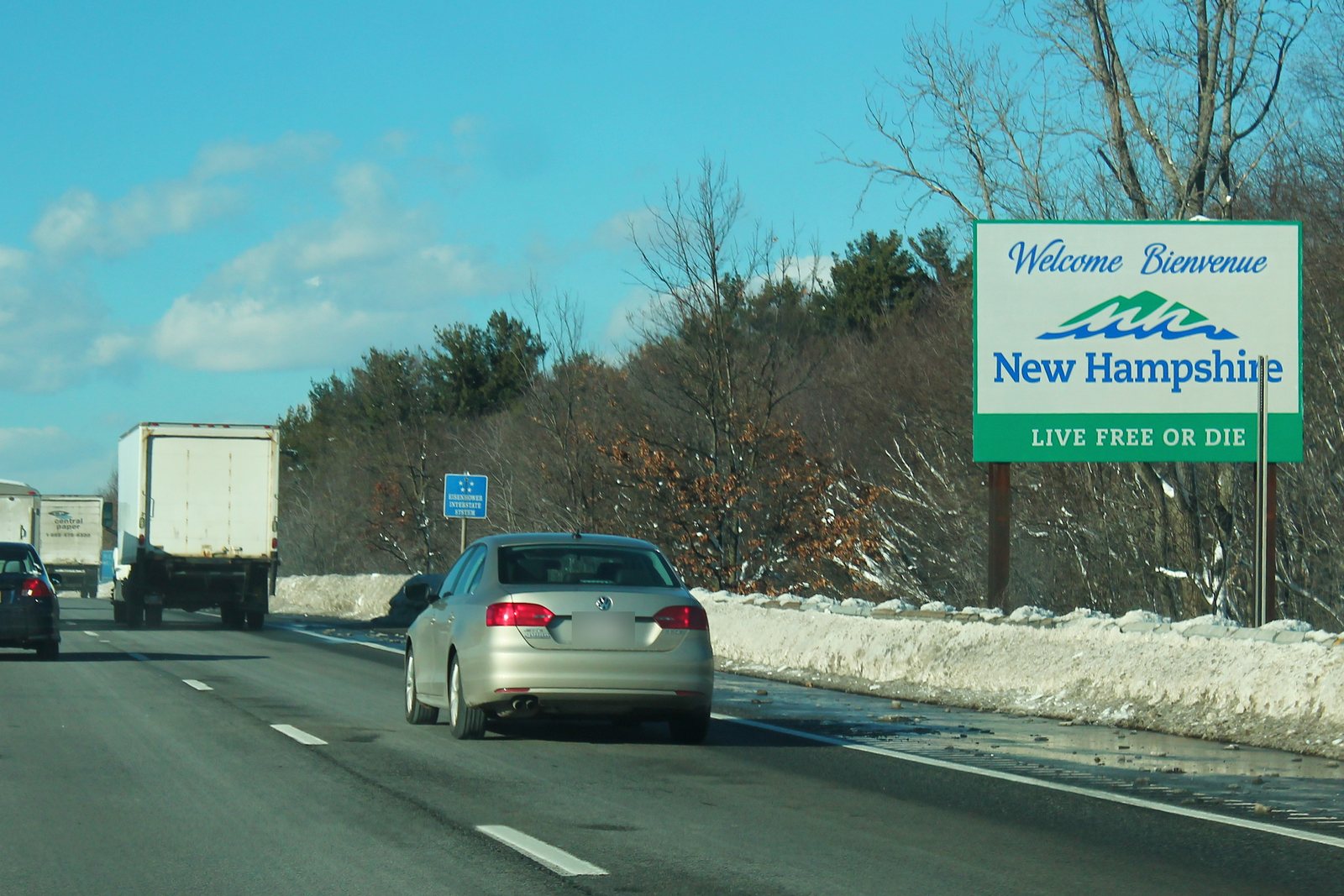
No sales tax and no tax on wages get all the attention. The property tax bill, the commute and the town you pick are where the move actually gets decided.
Moving from Massachusetts to southern New Hampshire changes three things more than anything else: how you’re taxed, how you get to work, and how much your town decides for itself. New Hampshire has no general sales tax and doesn’t tax wages. It does have property taxes set town by town, and if you keep a job in Massachusetts, Massachusetts still taxes the pay you earn there. Here’s what to look at before you list in Massachusetts and start shopping north of the line.
I’m licensed in both New Hampshire and Massachusetts, so I see this move from both ends. None of this is tax or legal advice. It’s where the public information lives, so you can check it yourself and bring better questions to your accountant.
The tax trade, in plain terms
Massachusetts has a 5% income tax and a 6.25% sales tax. On top of that, there’s a 4% surtax on taxable income above $1,107,750 for tax year 2026.
New Hampshire has no tax on wages and no general sales tax. The old interest and dividends tax was repealed for tax periods starting on or after January 1, 2025. What you will see is an 8.5% meals and rooms tax on restaurant meals, hotel rooms and car rentals.
The bill you’ll feel is property tax, and it varies a lot by town. The state’s full value rates for 2025 put Bedford at $14.20 per $1,000 of value and Peterborough at $20.40. That gap matters more than most people expect on the same priced house. I walk through how to read those numbers in how New Hampshire property taxes affect what you can afford.
If you keep your Massachusetts job
This is the part that catches people. Massachusetts taxes nonresidents on Massachusetts-source income, and that includes pay for work you physically do in Massachusetts. Living in New Hampshire doesn’t change that.
If you split your week, Massachusetts generally apportions your pay by the days you work in Massachusetts over your total working days. Pay for work done entirely outside Massachusetts isn’t subject to its income tax, as a Department of Revenue letter ruling spells out. So a hybrid schedule with real New Hampshire work-from-home days can make a difference. Get your actual numbers from a tax preparer before you count on the savings.
The commute
Southern New Hampshire is a wide band. From our town guides, Nashua is about 40 miles from Boston, Manchester about 53 and Peterborough about 70. Those are road miles, not rush-hour minutes.
If you don’t want to drive into the city every day, you have a few options:
- Boston Express buses leave the Nashua Transportation Center at Exit 8 on the Everett Turnpike, which has 377 free parking spaces, and run to South Station and Logan.
- The Boston Express I-93 route picks up in North Londonderry (Exit 5) and Salem (Exit 2) and also goes to South Station and Logan.
- The MBTA Lowell Line runs from Lowell to North Station. Lowell is about 25 minutes from the center of Nashua without traffic.
For flights, Manchester-Boston Regional Airport is close to a lot of these towns. Whatever you plan on, drive the commute once at the hour you’d really be leaving before you buy.
Buying a home on this side of the line
New Hampshire charges a real estate transfer tax of $0.75 per $100 of the price, and under RSA 78-B it’s charged to both the buyer and the seller. That and the other line items are in New Hampshire closing costs and the transfer tax.
Outside the cities, plenty of houses run on a private well and a septic system. If you’ve only owned on town water and sewer, read up on wells, septic and seller disclosures before your first showing. For prices and how fast things are selling, check the latest market update.
If you’re selling in Massachusetts and buying here, plan the timing of the two closings first. That’s the piece that needs the most coordination, and it’s easier when one agent can see both sides.
Schools: do your own homework
New Hampshire districts are organized differently from what you may be used to. Towns are grouped into School Administrative Units, and some towns share a cooperative district or send older students to another town’s school. Which school serves a house comes down to the address. I don’t rate schools or districts, and no agent should. Here’s how to research schools when you’re buying here with the state’s public data.
Every town runs itself a little differently
New Hampshire towns handle a lot locally. Some still pass the budget at a traditional town meeting, and others vote by official ballot under RSA 40:13, which people here call SB2. Trash is another one: some towns have curbside pickup and others run a transfer station you drive to. Each of our town guides lists the town office and transfer station.
Once you move, you have 60 days to get a New Hampshire license and register your car, according to the New Hampshire DMV. Registration starts at the town or city clerk, not the DMV, and part of the fee is a town permit fee based on the vehicle’s original price, as Merrimack’s clerk explains it.
The best way to compare is town by town. Start with the guides for the border and turnpike towns, like Salem, Hudson, Nashua, Merrimack and Derry, then go further out to Bedford, Milford and Peterborough. For the day-to-day side, read what people don’t tell you about living in southern New Hampshire.
Frequently asked questions
New Hampshire has no general sales tax. It does charge an 8.5% meals and rooms tax on restaurant meals, hotel rooms and car rentals.
Yes, on your Massachusetts-source income, which includes pay for work you physically do in Massachusetts. Pay for work done entirely outside Massachusetts generally isn’t taxed there. A tax preparer can apply it to your schedule.
60 days after you establish residency in New Hampshire. Vehicle registration starts at your town or city clerk.
No. Rates are set town by town. The state’s 2025 full value rates, for example, were $14.20 per $1,000 in Bedford and $20.40 in Peterborough.