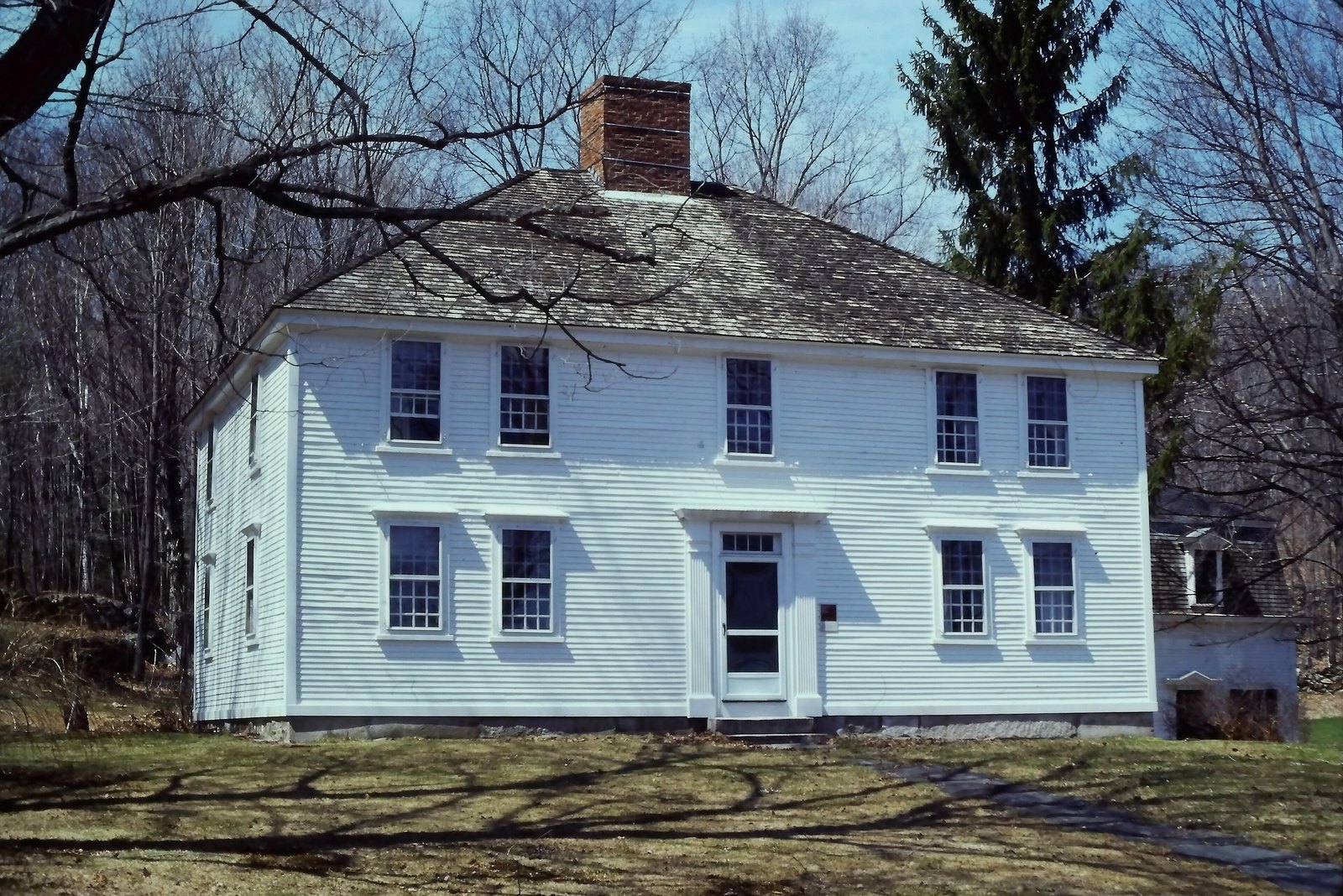
New Hampshire does not use a long catch-all seller disclosure form. It does require specific written notices, and most buyers will still inspect the well and the septic.
New Hampshire is not a state where the seller fills out a ten-page questionnaire about every appliance. That sometimes gets translated as “sellers do not have to disclose anything,” which is not right either. A short list of statutes applies to almost every house, and buyers — and their lenders — are going to ask about the well and the septic if the property has them.
The notices the statutes require
Before a purchase and sale agreement is signed on a property that includes a building, RSA 477:4-a requires the seller, or the seller’s agent, to give the buyer a written notification about radon, arsenic, lead, PFAS and flood risk. The buyer signs to acknowledge receiving it. The language is set out in the statute. It tells the buyer that these issues exist in New Hampshire, that testing is available, and, for arsenic and flood, where to look for more information. It does not require you to test. PFAS, the statute notes, have been found at elevated levels more frequently in southern New Hampshire.
Separately, RSA 477:4-c requires a written disclosure, again signed by the buyer, about the private water supply and the sewage disposal system. For the water system, that includes the type, location, malfunctions, date of installation, the date of the most recent water test, and whether you have had a problem such as an unsatisfactory test or a test with notations. For the sewage system, it includes the size of the tank, the type of system, location, malfunctions, age, the date it was last serviced, and the name of the contractor who services it. If you do not know a fact, you have to say that in writing.
For a one- to four-family dwelling, RSA 477:4-d requires a similar written disclosure earlier in the process — before or while an offer is being prepared — covering the private water supply, the private sewage system, the type and location of insulation, and whether the property is in a federally designated flood hazard zone. Unknown information has to be stated in writing there as well.
If the house was built before 1978, federal lead-based paint disclosure rules also apply, in addition to the state lead notification.
None of this is a complete “everything that has ever been wrong with the house” form. It is also not a reason to be cagey. If you have test results, service records or a known problem, putting them in the buyer’s hands early usually saves time later. This is a summary of the statutes, not legal advice; a closing attorney can walk you through the forms for your property.
Wells and septic, in practice
A large share of southern New Hampshire homes, especially outside the more built-up parts of Nashua, Manchester or Bedford, and in towns like Peterborough, Jaffrey or Hillsborough, sit on a private well and a septic system. Buyers routinely make their offers contingent on a water test and a septic inspection. Lenders often require both.
If you have not tested the well recently, do it before you list, through an accredited laboratory, and keep the report. The New Hampshire Department of Environmental Services publishes private well testing recommendations; the statutory notification already points buyers there. In this part of the state, buyers will often want a panel that includes bacteria, arsenic, radon in water, and PFAS, along with the more basic minerals and metals. If a result is high, you can decide whether to treat it now or to be ready to discuss treatment with a buyer. Surprises at inspection are more expensive.
For the septic, pull the pumping and service records, and consider having the tank pumped and the system inspected before the listing goes live. A failed field or a tank that has been neglected will show up, and it is better to know the condition when you price the house.
What is worth fixing before you list
You do not have to renovate your way to a sale. You do want to avoid the kind of inspection problem that makes a buyer walk or renegotiate from a position of fright. In practice, that usually means a short list.
The obvious safety and weather items: a roof that is clearly at the end of its life, active leaks, non-working smoke or carbon monoxide alarms, peeling paint on an older house (which raises lead questions), and trip hazards at the entries.
The systems buyers will test: well, septic, and, where it is relevant, radon in air. Heat and hot water that do not work will also come up immediately.
The small stuff that photographs poorly and reads as deferred maintenance: overflowing gutters, a broken storm door, a yard full of leftover projects. Curb appeal is not a statute, but it is part of how the first week of showings goes.
If a repair is expensive and you do not want to do it, price the house for the condition it is actually in and be upfront. Trying to get a “fixed” price for an unfixed problem is how listings stall. For more on that, see how to price a home in southern New Hampshire.
The town guides for Bedford, Peterborough, Nashua, Manchester, Milford, Hillsborough, Jaffrey, Derry and Salem are a useful backdrop if you are selling in one of those places. Taxes, utilities and the housing stock all feed into how buyers look at the property. The disclosure forms still have to be accurate for the house itself.
Frequently asked questions
Not a long general property-condition form. Sellers do have to give the statutory radon, arsenic, lead, PFAS and flood notification, plus written information about the well, septic, and, for one- to four-family homes, insulation and flood-zone status.
The statutes require you to disclose the last test and any problems, not to run a new test. In practice, buyers and lenders almost always require a current water test, so having one before you list is usually time well spent.
Follow current DES private well testing recommendations, and expect buyers to look at bacteria, arsenic, radon in water and PFAS, which the state notification notes are more often elevated in southern New Hampshire.
The RSA 477:4-a notification and the RSA 477:4-c water and sewage disclosure are due before the purchase and sale agreement is signed. For a one- to four-family home, RSA 477:4-d is due before or during preparation of an offer.