Two houses with the same price can carry very different tax bills. The posted rate is not the number to compare from town to town.
New Hampshire does not have a general sales tax or a broad-based income tax, and towns lean on the property tax to pay for local services. That makes the tax bill a real part of the monthly cost of living here, not a footnote. A buyer who looks only at the list price can end up stretched in one town and relatively comfortable in another, at the same purchase price.
How the bill is figured
Your tax is the town’s tax rate times the assessed value of the property, usually expressed as a rate per $1,000 of assessment. Towns set a new rate each year after the budget is done, and they revalue property on their own cycles. After a revaluation, assessed values often move closer to recent sale prices, and the posted rate may drop even if the actual bill does not fall by the same amount.
That is why the posted rate is a poor way to compare towns. A town that last revalued a few years ago can show a higher rate than a neighbor that just finished one, even when the tax on a house of equal market value is similar — or the reverse. The New Hampshire Department of Revenue Administration publishes a full value tax rate for each municipality, which estimates what the rate would be if every town assessed at 100% of market value. That is the figure to use if you are trying to compare one town with another.
The 2025 full value rates, from DRA’s 2026 annual report, put Bedford at $14.20 per $1,000 and Peterborough at $20.40 per $1,000. On a house worth $550,000, that works out to about $7,810 a year in Bedford and about $11,220 a year in Peterborough, before any exemptions or credits. Those are illustrations using equal values, not a prediction of a particular bill. Real estate values also differ from town to town, so a typical house is not the same size or the same price in both places.
What the local numbers look like
Bedford’s posted 2025 rate was $16.49 per $1,000. Of that, $10.45 was the local education portion, $3.87 municipal, $1.15 the state education tax, and $1.02 the county, according to the Bedford assessing department. School costs are the largest piece in a lot of southern New Hampshire towns, which is worth knowing if you follow budget season. Bedford has since issued a 2026 rate of $14.73 per $1,000 after a 2026 revaluation that raised residential values about 18% overall.
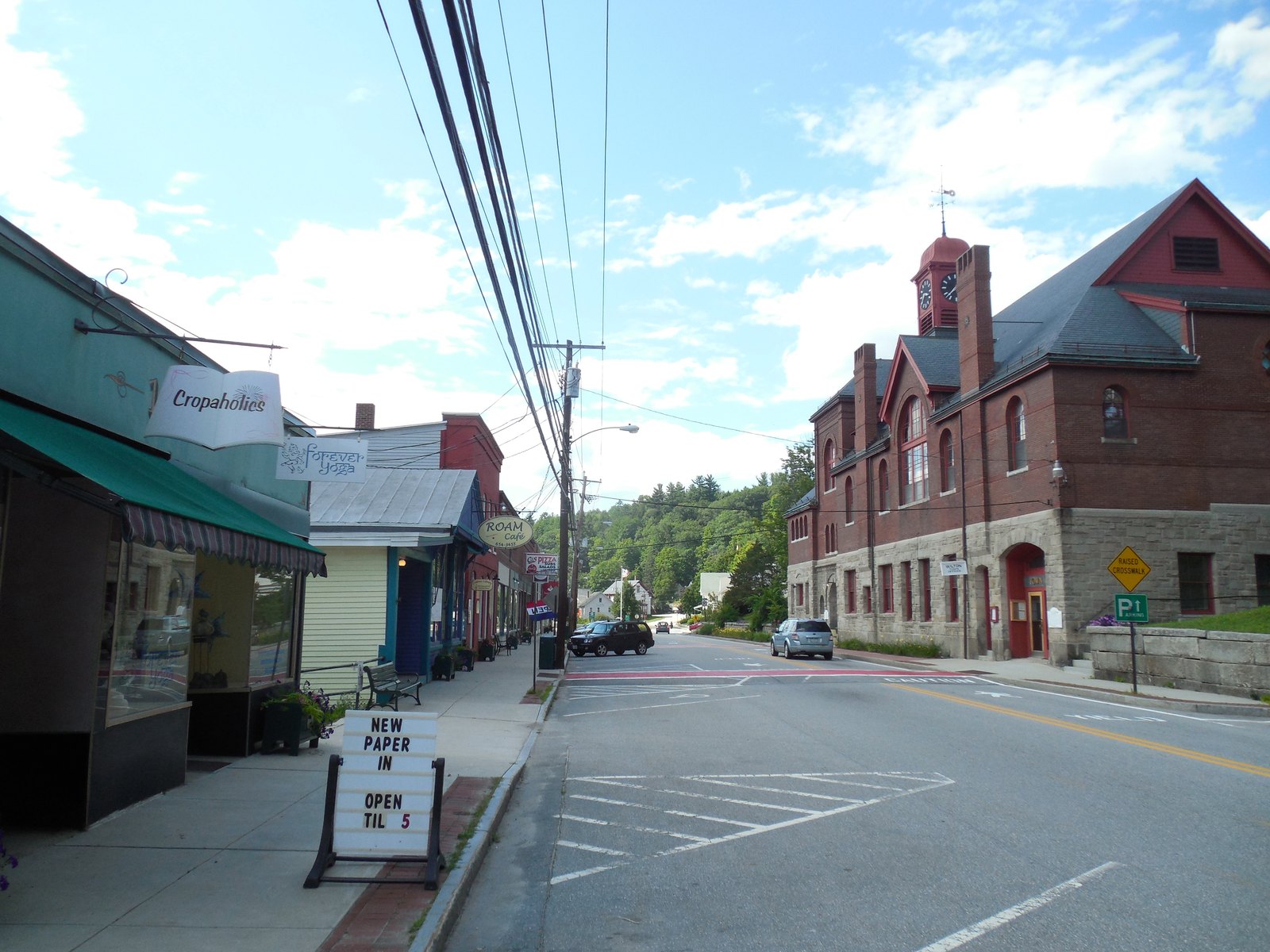
Peterborough’s 2025 posted rate was $22.35 per $1,000, after a 2025 revaluation, according to the Peterborough assessing department. As of November 10, 2026, the 2026 rate had not been set.
The same DRA table puts Salem at $12.23, Manchester at $12.95, Nashua at $14.65, Milford at $16.17, Derry at $16.73, Jaffrey at $17.69, and Hillsborough at $19.05, all per $1,000. Those gaps are large enough to change a monthly payment.
For a closer look at a given town, including how trash, utilities and commuting figure in, start with the guides to Bedford, Peterborough, Nashua, Manchester, Milford, Hillsborough, Jaffrey, Derry and Salem, or see the full towns list. If you’re comparing this with what you pay in Massachusetts now, including income and sales tax, see moving from Massachusetts to southern New Hampshire.
How this shows up in a mortgage
Lenders do not just look at the purchase price. They underwrite the principal and interest together with taxes, insurance and any association fees. Two houses at $550,000 are not the same loan if one carries a $7,800 tax bill and the other carries $11,200. The difference is a few hundred dollars a month, and it can change how much house a given income will support.
If you are coming from a state with high income or sales taxes and lower property taxes, the bill here can feel larger than you expected even when your overall tax picture is different. Run the numbers with the town’s actual rate and a realistic assessed value, not a rule of thumb from somewhere else.
A few practical checks
Ask the town, or look at the property’s tax card, for the current assessed value and the most recent bill. Confirm whether a revaluation is underway or just finished. If the sale price is well above the assessment, the next bill may be calculated on a higher value.
Exemptions and credits — for example, some veteran or elderly exemptions — are set by each town and have their own rules. Do not assume they travel with you from another state.
This is not tax advice, and it is not a prediction of next year’s rate. Rates change. The useful habit is to compare towns on a full-value basis, then price the monthly payment with taxes included.
Frequently asked questions
The town’s rate per $1,000 of assessed value, times the assessed value of the property. Towns reset the rate each year.
Assessments are not all at the same percentage of market value. The Department of Revenue Administration’s full value tax rate adjusts for that and is the better comparison.
The 2026 issued rate is $14.73 per $1,000. The 2025 posted rate was $16.49, and the state’s 2025 full value rate was $14.20.
The 2025 posted rate is $22.35 per $1,000, and the state’s 2025 full value rate is $20.40. The 2026 rate had not been set as of November 10, 2026.